


-
 Language

News
Transforming Human Life with Laser Technology
The Art of Metal Processing Bending: Principles and Practices
Release Time:
Apr 21,2026
Discover the fundamentals of metal processing bending and its applications in manufacturing.

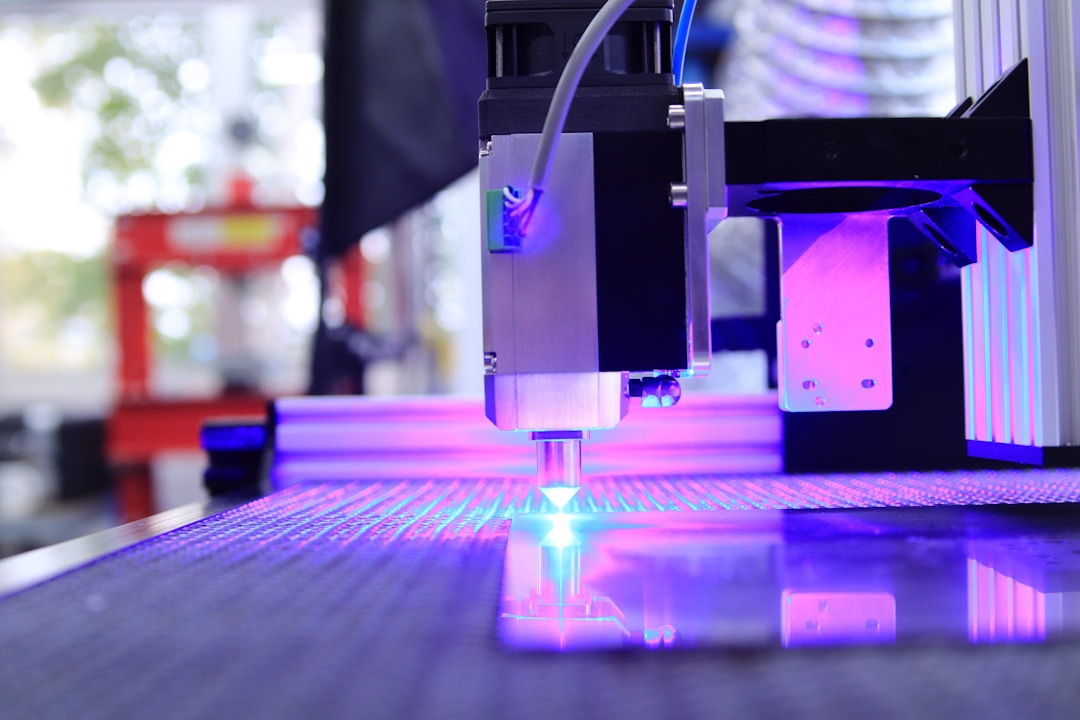
Image Source: unsplash
Understanding Metal Processing Bending
Ah, the world of metal processing bending! It's a fascinating domain where creativity meets precision. Whether you're a seasoned pro or a curious newbie, grasping the fundamentals can make all the difference.
What Is Metal Processing Bending?
Metal processing bending refers to the technique of shaping metal into desired forms through various bending methods. Think of it as molding clay, but instead of soft, pliable material, you're working with strong, durable metals. This process is pivotal in industries ranging from automotive to aerospace.
How Does It Work?
So, how does this magical transformation occur? Well, it all starts with the right machinery. Common equipment includes press brakes, roll benders, and tube benders. These machines apply force to the metal, allowing it to bend at specific angles without breaking. The key here is to find the sweet spot where the metal can be manipulated without losing its structural integrity.
The Science Behind Bending
Oh, we're getting into the nitty-gritty now! The science is based on stress and strain. When a metal is bent, it experiences tension on one side and compression on the other. If you exceed the metal's yield strength, it won't just bend; it'll break. A well-planned bending process ensures the metal remains within its elastic limits, allowing it to return to its original shape if the force is removed.
Types of Bending Techniques
There's no one-size-fits-all in metal processing bending! Here are a few popular techniques:
- Air Bending: This method uses a punch to create a bend by only partially forming the metal against a die. It's versatile and can produce various angles.
- Bottom Bending: Here, the metal is pressed down into a die, creating a more precise angle. It often requires more force but results in a tighter bend.
- Roll Bending: Ideal for creating circular shapes, this technique uses three rollers to gradually bend the metal into a curve.
Applications in Various Industries
From construction beams to decorative metalwork, metal processing bending has a wide array of applications. For instance, in the automotive industry, it's crucial for creating parts like frames and exhaust systems. On the other hand, the architectural field utilizes it for creating stunning facades and structural components.
Why Choose Metal Processing Bending?
You might wonder, why go for metal processing bending over other methods? Well, it offers excellent strength, flexibility, and aesthetic appeal. Plus, with the right techniques, you can achieve complex shapes without compromising the metal's durability. Pretty neat, huh?
Challenges and Considerations
Sure, it sounds fantastic, but it's not without its challenges. Factors like material type, thickness, and desired angles can complicate the bending process. Moreover, achieving consistency across multiple pieces can be tricky. Thus, having skilled operators and quality machinery is key to success.
Conclusion
In conclusion, metal processing bending is more than just a technique; it's an art form that combines science with skill. Whether you're looking to create functional components or intricate designs, understanding the principles behind bending can open a world of possibilities. So, roll up those sleeves and get ready to bend some metal!


Contact Information
Main Factory: Zhendong Industrial Park, Bowang Town, Bowang District, Ma'anshan City, Anhui Province, China.
China Office: T15 Smart City, Chancheng District, Foshan City, Guangdong, China.
UAE Office: 106, Al Huda Building, Al Garhoud, PO BOX: 80899, Deira - Dubai. United Arab Emirates.
Email us
For more information, please leave your message below.
SAF Coolest v1.3.1.2 设置面板 ZIMSD-ZYRG-UXAXE-AWD
无数据提示
Sorry, the current column is being updated, please look forward to it!
